Solving Veteran homelessness in the U.S.

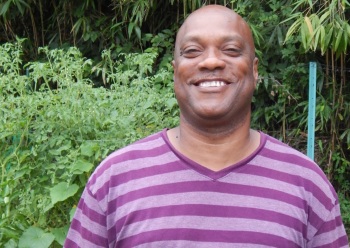
Jean-Michel Giraud, Executive Director at Friendship Place

Jean-Michel Giraud
Executive Director, Friendship Place

In the last few years, the Department of Veterans Affairs has revolutionized its service delivery, partnering with homeless services organizations like Friendship Place, in an unprecedented effort to solve veteran homelessness in the nation.

This initiative, which receives equal support from both sides of the aisle on Capitol Hill, is the result of the VA’s visionary planning.

A few years ago, faced with chronic homelessness among Vietnam era veterans and the mounting pressure of returning troops from Iraq and Afghanistan, the VA sought support from the federal government to launch a multi-pronged initiative to house or re-house veterans and their families.

Working with community-based non-profit organizations, the administration, under the leadership of Secretary Shinseki, has been able to stretch the bounds of its own service constraints in an effective way. Partnering non-profits can pick up where the VA leaves off by, for instance, entering into agreements with local landlords and other service providers in a more flexible way as private entities.

Such public-private partnerships have helped propel these VA-sponsored programs to the forefront of the race to end homelessness in the US, putting it well ahead of many local jurisdictions where the response to homelessness has sometimes been impacted by policy challenges.

So, how did the VA do it?

Well, first, it took a hard look at its practices and worked to make them absolutely person-centered and outcomes-oriented. This has taken a fair amount of research. But, lo and behold, the VA is now hitting some pretty high notes on the rehabilitation stage. Rehab aficionados are finding the VA’s affiliation with CARF – the champion of rehabilitation standards in the US – particularly impressive, while homeless service providers are thrilled with the VA’s adoption of the Housing First model.

The vets coming through these VA-funded programs are seeing the difference. They’re rapidly rebuilding their lives, and doing so with dignity – an outcome echoed throughout the various service settings involved.

From the start, the VA decided to “work smart” by offering services based on needs – no more, no less than necessary – the result being a palette of both effective and cost-effective services. I think a great example of this is the careful delineation between SSVF services and HUD-VASH permanent supportive housing. The first is intended to stabilize veterans and their households in up to 6 months by providing them with homelessness prevention services or by helping then get re-housed. Supports for these individuals and families are rebuilt through benefit applications, job placement assistance and other vital services during that period.

The program targets veteran households that are still fairly resilient but need immediate short-term assistance to resolve their housing crises. Two years into this program the VA has helped thousands of vets maintain or regain stability through these interventions. This is the fastest and cheapest way to help vets who are likely to stabilize quickly.

The second prong in the VA’s approach is permanent supportive housing for veterans with greater challenges. This program offers services and long-term housing subsidies to vets who require more intensive supports. To establish this program, the VA was successful in securing assistance from Housing & Urban Development to supplement its own budget while farming out some of the work to local non-profits who provide the actual services to the veterans in order to secure specialty services like mental health services.

The partnership with VA has allowed Friendship Place to make a difference in the lives of people like Shelley Gilbert. It didn’t matter that Shelley had served in the military as a member of the US Coast Guard, or that she had worked for two decades as a healthcare professional. It didn’t even matter that one of her daughters and two grandkids lived with her. When she fell on hard times and wasn’t able to pay rent, she was forced into a ruthless cycle of nights spent in motels, shelters and on couches. She was homeless.

When she reflects on her experience, one night in particular comes to mind. “I slept in the bus stop. It was snowing, raining, and about 25 degrees out,” she says. “That was the most humbling night of my life.” When Shelley found the VA’s hotline number, everything changed. They connected her with Friendship Place and within 3 weeks, our staff was helping her fill out apartment applications.

Now housed and working full time, Shelley sets aside time in her busy schedule to give back. She shares her story with groups of students and volunteers at Friendship Place, delivering a message of hope and possibility. “Just don’t give up,” she says. Shelley’s story hits home with me, and solidifies my belief that incredible accomplishments can be made when we work hard, and most important, work together.

DC’S NEW STATUS QUO: HOMELESS FAMILIES, CHILDREN LEFT IN THE COLD

Jean-Michel Giraud, Executive Director at Friendship Place

Jean-Michel Giraud
Executive Director, Friendship Place

If you follow DC news, you are well aware of the recent buzz around the crisis facing homeless families in the District. While this issue needs to be addressed – and soon – this is not a new epidemic. Family homelessness has been escalating for quite some time, and this year is projected to surpass homelessness among individuals.

As if conditions weren’t already sub-par for homeless families, in April 2012 the City stopped admitting them into the DC General Shelter. The rationale was that during the “warmer” months, space would not be made available to families in order to reduce expenses. This meant that from April through October, families were left to find shelter on their own in cars, hospital waiting rooms, Union Station or anywhere they could. This left us – local homeless service providers like Friendship Place – scrambling to keep these families from falling through the cracks.

Five months later I attended a hearing of the Committee on Human Services at City Hall where a young mother explained that she had been spending nights in the waiting area of the emergency room at Sibley Hospital and in other places. She went on to say that the 3-month old infant she was holding on her breast as she testified had never slept in a bed. The baby’s siblings, two toddlers, were running around the room in the Wilson Building as she spoke.  She told Chairman Graham she had found a way to secure the little ones on an armchair, so they would not fall in their sleep, while she held the baby all night long. She looked worried. I could imagine how scared she must have been that some harm would somehow come to the children during the night. Sitting right next to me on the panel, she looked exhausted. She explained she was told there was no room for her and the children at the shelter. At the end of the hearing, a staffer from the Washington Legal Clinic for the Homeless helped her coordinate resources.

This was in September, and the assumption was that by November 1st, the beginning of “hypothermia season,” conditions would improve for the families on the street. The City is mandated by law to offer shelter to families and individuals when the temperature or wind chill factor is 32 degrees or below, but families were almost never turned away from shelter in the cold months. Now the status quo is very different, and very troubling.

The City turned away all shelter-seeking families from April through October last year, and we soon found out that in the cold winter months when the temperature was still frigid but didn’t drop below 32 degrees, families were turned away as well. We all know how unsafe weather conditions still are between 32 and, say, 45 degrees. Nobody would choose to spend the night outside during the winter, let alone ask our children to do that, but this is precisely what DC has been asking families to do.

What is probably even more unsettling is the well-advertised $417 million surplus that the City just put into reserves. It is rather painful to some of us to think that part of this surplus was amassed on the hardship endured by children.

I invite my local followers to join Friendship Place at our spring symposium on April 18 examining the growing crisis of family homelessness. Together with our panel of experts, moderator Ray Suarez and concerned community members, we hope to examine new solutions to this pressing issue.

Family Homelessness: An American Reality

img_6312

By: John Harris III, Americorps VISTA
Founder of Authentic Reflection

“..a family with one full-time worker earning the minimum wage cannot afford the local fair-market rent for a two-bedroom apartment anywhere in the United States.” ~National Alliance to End Homelessness

There are some people in our land of opportunity who are deprived of the resources necessary to exercise basic rights.  They work hard.  They work long, hard hours with heavy burdens, and they do not quit.  They believe in the American Dream although their realities would deem such a life as fantasy.

How can we be promised the rights to life, liberty, and the pursuit of happiness yet face inhumane decisions?  No one should ever be asked to choose between food, housing or medicine.  It’s difficult to believe in the right to pursue happiness when people aren’t at liberty to pay the hospital to save their children’s lives—no matter how long or hard they work.

What’s a home without the people you love?  People shouldn’t be forced to choose between rent and life.

What do we do when working hard isn’t enough?  What do we do when the very work ethic we glorify from the playpen to retirement isn’t even enough to guarantee housing?

We do something about it.  Together. Homelessness is an issue that affects us all.

Family homelessness is projected to surpass homelessness among singles in DC this year.

Help end homelessness.  Help rebuild lives.  Every bit counts.  Contribute what you can in the best way that you can, whether through your talent, your home, your food, your money, your time, or simply your smile.  It all matters.  Do your part.  Don’t accept homelessness as a possibility for the families in our communities.  As long as it is accepted, it will remain.  Remember the golden rule.

See you. Be you. Do more. © 

Friendship Place’s Education and Advocacy Symposium

Family Homelessness: DC’s Growing Crisis

National Presbyterian Church

April 18th 6:30pm

100 Homeless DC Residents Back to Work through Friendship Place’s AimHire Program

Friendship Place’s AimHire Job Placement program reached a milestone Tuesday, with its 100th successful job placement. Of the 100 homeless adults back to work in the DC Metro Area, 97 have also found housing – either temporary or permanent – through the program.

Fully launched 18 months ago, AimHire has earned a reputation for being one of the most effective job placement programs for homeless men and women in the area. The program is privately funded and the staff tailors their approach to the unique needs of each job-seeking participant, many of whom face significant barriers to self-sufficiency.

Launching a job placement program for a high-barrier population in a rebounding economy and competitive job market is no easy feat. “We know that people experiencing homelessness want to get back on their feet and rebuild their lives. They want to get back to work. Many simply do not have the resources that they need to make it happen,” said Jermaine Hampton, Director of AimHire. “So we responded by launching AimHire and got to work building connections in the community.”

Targeted partnerships with congregations, business owners, employers, landlords and key community members is the foundation of AimHire’s success. Each partner plays a specific role, fulfilling a specific need – whether it’s hiring participants, volunteering as a mentor, or pulling funds together for temporary housing.

“The greatest reward of all is to see people regain their independence who have spent years, even decades, trying to get out of homelessness,” says Drew Gossett, one of the AimHire staff members. “When provided with the opportunity to be equally evaluated for jobs as the rest of society, our AimHire participants show up with a tremendous drive and ability to succeed.”

Rossi’s journey to employment perfectly echoes this sentiment. Trying to break into the job market with the stigmatizing label of “ex-offender” can ruin any chance of employment from the get-go. But that didn’t stop her or the AimHire team. For several months, Rossi came in to Friendship Place’s Welcome Center to work on her interview skills, learning how to emphasize her many strengths and abilities and regain the confidence to market herself to an employer.

After Rossi received the call from a local nonprofit that she “got the job,” her spirits soared. “I had a contact there that got her foot in the door,” recounts Jermaine, “but she did all the leg work and completely aced the interview.” Now employed and on her way to stable housing through a rental subsidy fund at Friendship Place partner Anne Frank House, Rossi feels like she has her life back, thanks to what she received from the Friendship Place team – hard work and dedication. Her employment marks the program’s 100th job placement.

According to Executive Director Jean-Michel Giraud, AimHire reaches beyond traditional vocational programming. “Our work is done through leveraging partnerships, fostering job-readiness skills and practicing solidarity with our participants. The AimHire staff and partners stand by each participant as they embark on their unique path to employment. It’s a conviction that with the resources available, a way will be found.”

Contact Emily Fagerholm for more information.

Homeless for the Holidays

Jean-Michel Giraud, Executive Director at Friendship Place

By: Jean-Michel Giraud
Executive Director at Friendship Place
Originally published on the Huffington Post Impact Blog

Well, Turkey Day is over and the malls were packed on Black Friday, and through the weekend, with shoppers trying to catch those quickly vanishing best bargains of the year.

But, what does the holiday season really mean to us and to people living on the streets?

For one, it is a time when we look back at the rest of the year and reflect on what has happened. We are thankful for what the year has brought us: friends, family, work or just generally managing in a tough economy. And this is good, but as we look at people living on the streets of our cities and towns, we know that they probably don’t have as much to be thankful for and something weighs on our hearts as we wonder what the holiday season really has in store for them. To most people experiencing homelessness, the season means more hardship associated with colder weather conditions in many states in the US.

During the winter months, homeless service organizations are faced with greater demand on the street, and in their drop-in centers and shelters. So, if you’re wondering what to do to help your neighbors without homes, you might want to find out who helps these folks in your neighborhood, around your workplace or near your kids’ schools and colleges.

Did you know that over 33,000 college students will be homeless during Winter Break this year?  And that, on any given night during the holiday season, 636,000 people in the US will be sleeping on streets and in shelters? There’s also a looming crisis that’s rarely talked about, but was recently reported on by the National Alliance to End Homelessness: the 6.8 million folks living with friends, family or other nonrelatives for economic reasons – “doubled up” – in the US. This population could easily find themselves living on the streets, with little-to-no financial cushion, if their housing arrangements were to change.

These figures are staggering.

So, as you decorate your home with all the right touches for holiday parties and the like, and your mind keeps drifting back to the woman you saw on the street with a sign in front of her, here are some things you can do to help her and the few million Americans who do not have homes this December:

  1. Think Nationally, Act Locally. Contact your elected officials and ask what their offices are doing to end homelessness in your state and community. Educate yourself about the resources that are out there for your homeless neighbors and spread the word when you encounter someone in need. Sharing information with your homeless neighbors about where they can go to start taking steps toward rebuilding their lives can be absolutely life changing.
  2. Pitch in. Do a sweep right around you and find out what organization is helping people where you are. I can guarantee that that organization is looking for non-perishable food, gently worn coats, volunteer help and your Washington, Lincoln or Franklin bills. No gift is too small or too large.
  3. Start your own alternative holiday giving tradition. If you’re looking for the perfect gift for people whose closet doors don’t stay shut any more, ask if you might make a financial gift to their local homeless service organization on their behalf.

So how about it?  Can you act today and reach out to these folks? Winter is going to be tough this year, we hear, and the community needs you to keep your homeless neighbors safe on the streets.

This holiday season, let’s all commit to taking less so others may have more. 

Read more blogs from Jean-Michel here.

Simple Thanks

Guest Blogger: John Harris
Special Events Associate at Friendship Place & Founder of Authentic Reflection

When you wake up in the morning with your stomach hurting from hunger in a pitch black windowless room, you still have a lot to be thankful for. At least I do. I have every reason to walk out of that basement apartment every morning with my head high and my heart open. I have my health. I have my smile. And most of all, I have the privilege of doing impactful work for an organization rebuilding lives every day.

It’s easy to become consumed with first world problems in a society that typically measures success by the number of commas in your bank account. It’s easy to question why you chose to do AmeriCorps when your friends post pictures of three course meals, while you brag over your newfound talent as a Ramen Noodle chef.

You watch and you congratulate as they buy new cars. You listen to them complain about their annoying bosses or how they miss the college life. You listen and nod as they crack jokes about your shortcomings and “life of poverty.” Then you laugh, smile, and shake your head.

There’s no course in college on how to measure self-worth. It’s just one of those lessons life teaches you in its day-to-day classroom. I learned from Mr. Terry Snead that every day is “The best day of my life,” and when that’s coupled with the saying, “It’s the simple things in life that make life worth living,” this life thing becomes pretty easy. I just live moment to moment. There is nothing more significant at any point in time than the moment in which you live.

I survive off of my AmeriCorps living allowance, but I live off of the smiles I cause and memories I create. Those are my luxuries. There’s no amount of money I could be paid to replace the memory of dancing for five hours with over 700 kids and teachers or feeling as though I was Terry Snead’s hype man in a room full of French-speaking middle school students. It was all in the name of helping the homeless. We had fun, but most of all we educated and gathered support to continue to help those in need.

I found that I’d often end up talking to youth about how working as the Special Events Associate at Friendship Place was my first “big boy job.” People watch you more than they listen to you, so I hope that I left a significant enough impression that they too may pursue careers of service.

My position as the Special Events Associate is my first staff position since graduating in May and I couldn’t have found a better place to begin my career. Friendship Place really looks out for me — from Tanya and Emily making sure I take care of myself, to Michael introducing me to his world at Potbelly’s, to Jean-Michel and Geoff advising me on how to advocate and Ben giving me those eager high fives. I am thankful to be able to work for such a great organization and for them having the confidence in me to go out and work on their behalf for the Help the Homeless program. It’s been great and I look forward to what’s to come.

Voting Matters

Guest Blogger Geoff Millard
Director of Special Projects at Friendship Place


I remember Election Day in 1984. I wasn’t even four years old and my father took me into the voting booth with him. I can’t remember much beyond my father’s size in that booth. He was a hulking man who would tease me for being small, even as I became a grown man. What is very clear to me, though, is the fact that it was important for him to show his son that he voted. That was the first time Dad took me with him into the voting booth. In ’88, ’92, and ’96 he continued the tradition. Even in those moody teenage years, when we could barely stand to be in the same room, we always went to vote together.

So when I could finally vote myself in 2000, I took him to the polls in my car. I signed the register and went into the booth. When I’d made my selection and pulled the lever that swished the curtains back, there was my Dad. It was only the second time in my life I’d seen a tear in his eye. My father died years ago, and I have never missed an election, thanks to him. I’ve cast a ballot for both president and school board with the same sense of civic pride.

I was, therefore, personally very excited when the Coalition of Housing and Homeless Organizations (COHHO) started a voter registration drive this year. This was yet another chance for Friendship Place to help our participants make a lasting impact on our community, and our nation. 

In my years of advocacy work I have often heard people say, “poor people don’t vote so poor people don’t matter to politicians.” That is something that I doubt has ever been true and something that I try to ensure people know will never be the case.

Early voting in the District of Columbia opened on October 22, Election Day itself being November 6. Within this 15-day time period, I have made it my mission to ensure that every person within the Friendship Place community — especially participants — with the desire to vote gets out to their local polling place and walks away with one of those “I VOTED” stickers.

We are all affected by the decisions made by the political establishment, but our homeless and formerly homeless participants’ very lives could be risked by cuts made, sometimes on a whim. It is for this exact reason that our participants should have a say in who gets to vote on those cuts. This happens by getting all of us to cast a ballot in every election that we can.

100% voter turnout will take a collective effort. We need to make sure everyone knows where to cast a ballot and organize rides to the polls. COHHO has worked for months to get participants registered to vote – registration has not closed but must now be done in person – and now it’s time to make it happen.

When I step out of the voting booth again this year I’ll think of my dad. Then I’ll join members of the Friendship Place staff in operating a shuttle service to the polls for anyone who needs it. What will you do on November 6th?

Anyone interested in learning more about COHHO & Friendship Place’s “Voting Matters” efforts, contact Geoff Millard.